EVENT DESCRIPTION
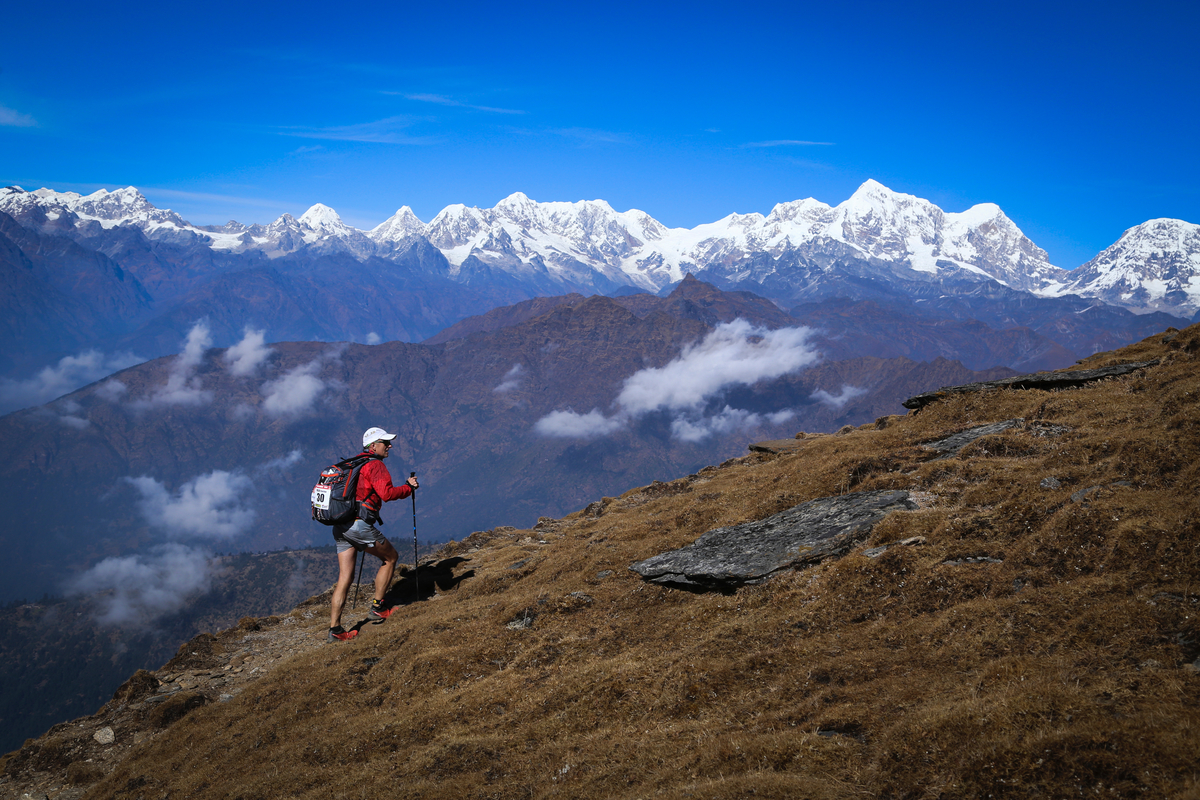
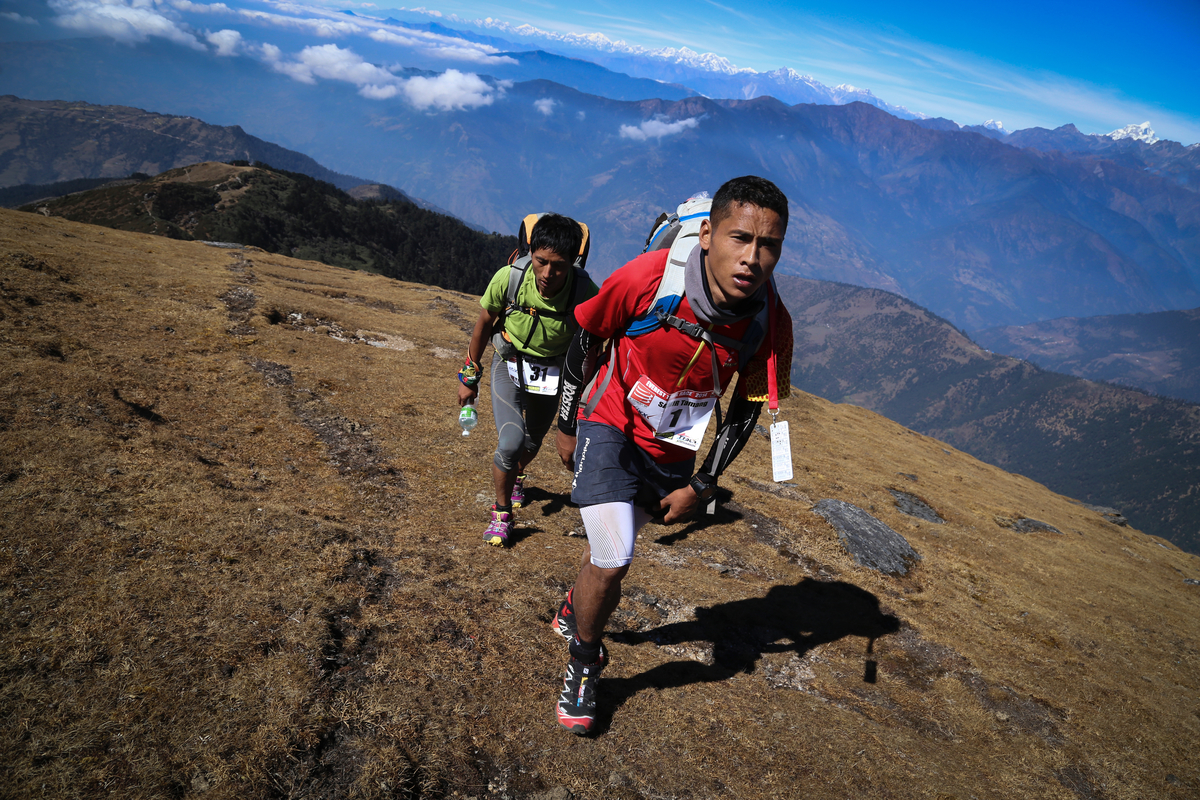
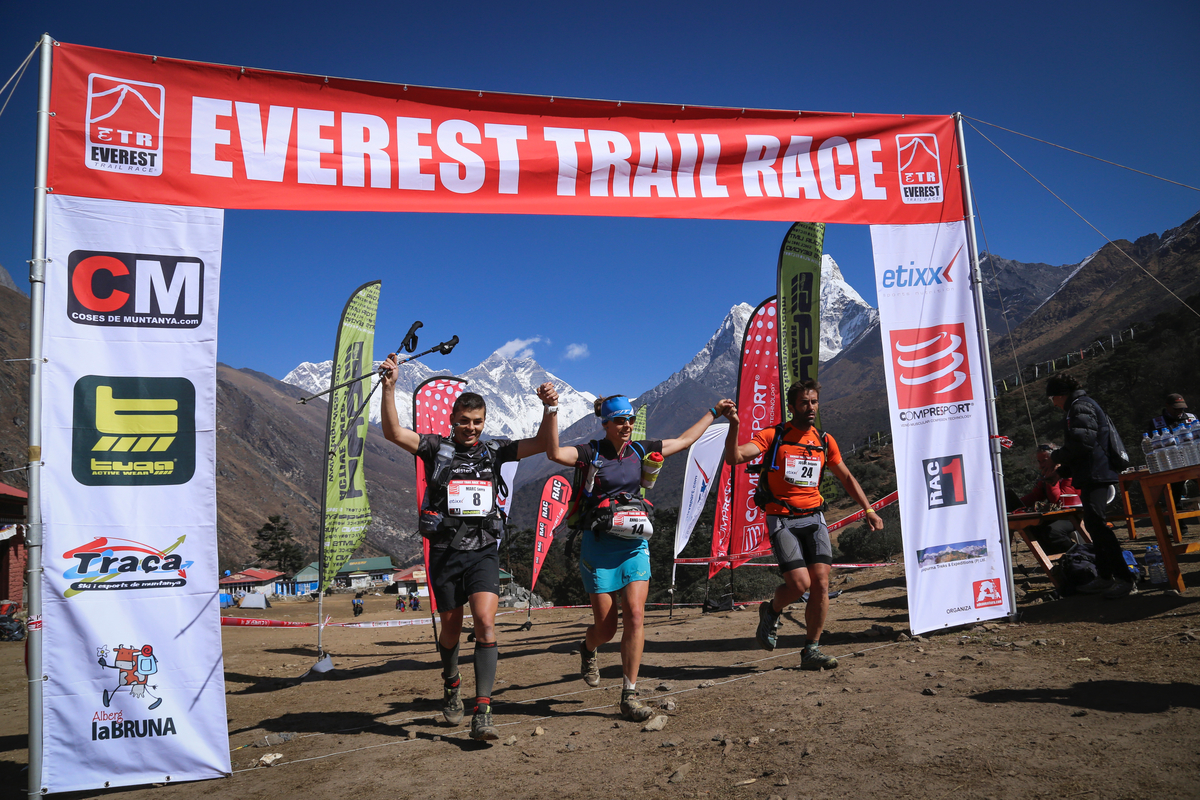
Set against one of the most iconic and awe-inspiring backdrops on the planet, the Everest Trail Race ranks as one of the world’s toughest high-altitude multi-day ultras.
The ETR is a partially supported multi-stage Ultra run in six days over a course of circa 100 miles (160km), but with a difference in altitude of more than 28,000m. Runners carry their clothing and sleeping bag over the course, whilst the organisations supports them with food, accommodation and logistical support throughout the race.
As an example of what lies beyond the starting line, the longest single stage in 2017 was over 23 miles (37km). Typical distances are broken down as follows:
Day 1 – 22 km (+ 1,975 m ascent)
Day 2 – 24 km (+ 3,486 m ascent)
Day 3 – 37 km (+ 2,521 m ascent)
Day 4 – 28 km (+ 2,479 m ascent)
Day 5 – 20 km (+ 2,224 m ascent)
Day 6 – 30 km (+ 2,105 m ascent)
The actual routes and formats change every year. The Race Director and his team spend a month meticulously planning routes that are only made public just before the event starts.
Competitors camp overnight in their own tents, which are transported from stage to stage. The most memorable sound of an evening is the rumble of weary laughter that echoes around the village.
The organisation comprises of:
- 15 Volunteers on the course itself
- 40 Support staff overall
- Qualified medical team
Demographic:
- 20% Previous ETR competitors
- 25-30% UK & Ireland entrants
- 35% Women
- 20% Veterans
- 5 teams of 3 or more per year
Race Summary
The ETR is a six-day partially supported race
The distance is circa 160 km.
The longest stage is about 37 km – that’s 23 miles
The race gets to over 4,000m